
Your hot water system can work just as hard in summer as colder months. From hot showers after a swim to rinsing off after yard work, your water heater needs regular service to keep working efficiently. If you notice your water heater isn’t working as efficiently, now is the perfect time to think about what system works best for your home.
Choosing between a traditional tank water heater and a tankless model is an important decision that each come with their share of benefits. Our team at Roberts Heating & Air Conditioning, Inc. guides Winnetka homeowners through your options to invest in a system that fits their household, budget, and long-term goals. Here’s what to know before you decide.
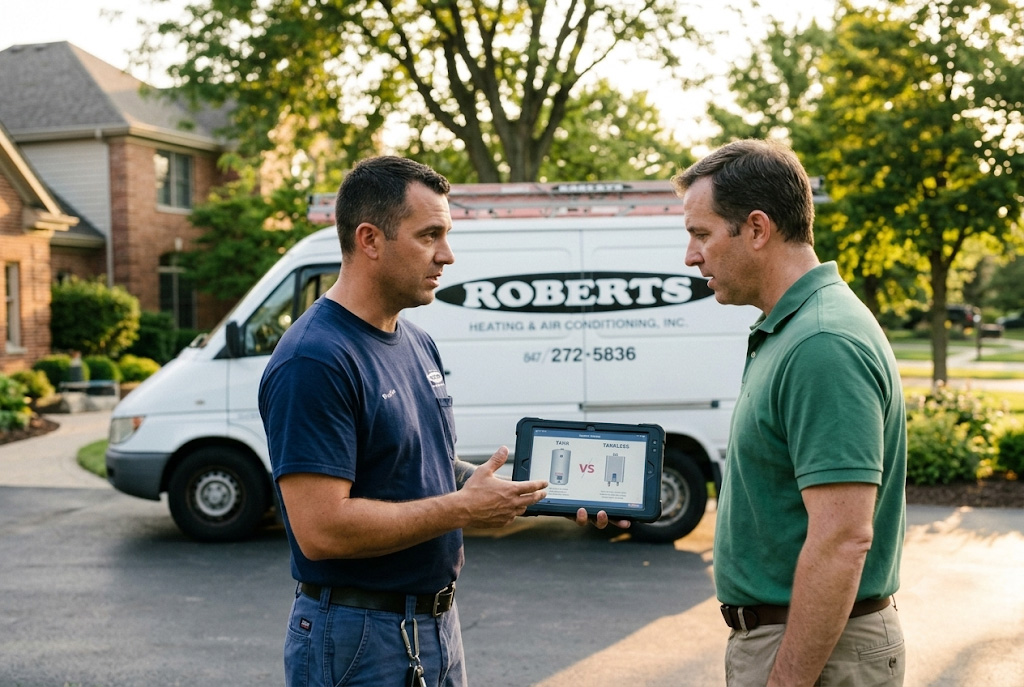
How Traditional Tank Water Heaters Work
Most homes have a conventional tank water heater that stores heated water in an insulated tank until you need it. Once that hot water is used up, the tank automatically refills and reheats the water water. Tank systems are still a popular choice because they:
- Cost less upfront
- Are familiar to most homeowners
- Can supply multiple fixtures at the same time
- Offer straightforward replacement when an existing tank reaches the end of its lifespan
If your routine is predictable any budget is a factor, a traditional water heater is usually the best option.
Why Choose a Tankless Water Heater System
Instead of storing hot water like a traditional tank, tankless water heaters only heat up water on demand. Instead, it heats up instantly when you turn on a faucet or appliance. The upside is you’re not paying to keep up to 50 gallons of water hot around the clock. Tankless systems are also good options because they provide:
- Greater energy efficiency
- Endless hot water during normal household use
- A compact, wall-mounted design that frees up storage space
- A longer expected service life than many traditional tanks
If your household keeps running out of hot water after several showers or loads of laundry, a tankless system can help solve that problem.
Think About Your Daily Hot Water Usage
Your home’s daily hot water routine will help you figure out which system works best. A home with staggered morning schedules could benefit from a tankless system because the demand is spread out. If you live in a large household that regularly runs multiple showers, the dishwasher, and the washing machine simultaneously, you may need a larger tankless unit or multiple systems to keep up with the demand.
What About Installation Costs?
Tank water heaters usually cost less to install, especially when you’re replacing an existing unit with a similar model and set-up. Tankless systems typically come with a larger initial investment that may need upgrades to your gas lines, venting, or electrical service. Although the upfront cost is higher, many homeowners like the potential energy savings and longer lifespan over time.
Think About Ongoing Water Heater Maintenance
Both tank and tankless water heaters benefit from regular maintenance, but the requirements are different. Traditional tanks should be inspected for sediment buildup and anode rod wear, while tankless systems often require periodic descaling, especially in areas with hard water. Understanding the maintenance involved can help you protect your investment and keep either system operating efficiently for years.
If you’re considering a water heater replacement in Winnetka, call Roberts Heating & Air Conditioning, Inc. to help you compare tank and tankless systems and recommend the right solution for your home and family.